

AI is reshaping the world of recruitment, and nowhere is that more evident than in the rise of chatbots in recruitment. From WhatsApp automations to conversational widgets on career sites, chatbot tools promise to streamline communication, speed up screening and boost candidate engagement. But while standalone recruitment chatbots are gaining popularity, the question recruitment agencies should be asking is not “Should we use chatbots?” — but rather “How should we use them?”
Chatbots deliver real value only when they’re integrated into a broader recruitment agency software ecosystem — not when they sit as disconnected tools. Used in isolation, chatbots can create fragmented experiences, duplicate data or even discourage qualified candidates who expect human support at key points. When connected to an intelligent applicant tracking system and recruitment CRM, chatbots become powerful advanced tools that enhance recruitment efficiency without replacing human judgement.
The Benefits of Chatbots in Recruitment
1. Improving Candidate Experience Through Instant Responses
One of the biggest frustrations for job seekers is silence. Studies show that more than 40% of candidates never receive an update after they apply. Chatbots can solve that instantly by confirming receipt, updating progress and offering next steps around job postings or job openings. They can sit across career sites, messaging platforms and even SMS – keeping candidates informed at all times.
But here’s the catch: if that chatbot isn’t connected to your candidate database or recruitment CRM, it creates a one-way loop. Candidates feel heard, but your recruitment teams have no visibility of the conversation. That’s why chatbot communication should feed directly into an end-to-end solution like Eclipse Core Pro, ensuring every interaction contributes to meaningful candidate profiles.
2. Automating Repetitive Tasks to Reduce Admin Pressure
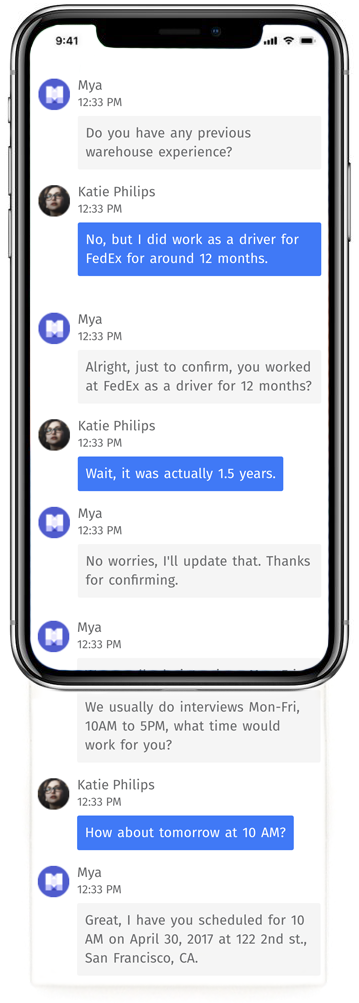
Recruiters waste hours every week chasing forms, checking availability and answering simple questions. Chatbots help remove that manual workload by handling:
- Application reminders and form completion prompts
- Pre-screening according to set criteria
- Scheduling and rescheduling interviews
- Responding to frequently asked questions
This automation frees recruiters to focus on client relationships, passive candidates and strategic candidate sourcing, rather than filling out spreadsheets or chasing confirmations.
3. Maintaining Candidate Engagement at Scale
In fast-moving recruitment operations, speed matters. When responses take too long, potential candidates move on. Chatbots help bridge the gap between first contact and human follow-up, keeping candidates engaged when your team is offline.
However, agencies must be cautious. Candidate journeys that feel too robotic can damage company culture perception and reduce employee engagement before someone even joins. The key is balance — automation first, human recruiter intervention when needed.
The Challenges of Standalone Recruitment Chatbots
1. Improving Candidate Experience Through Instant Responses
One of the biggest frustrations for job seekers is silence. Studies show that more than 40% of candidates never receive an update after they apply. Chatbots can solve that instantly by confirming receipt, updating progress and offering next steps around job postings or job openings. They can sit across career sites, messaging platforms and even SMS – keeping candidates informed at all times.
But here’s the catch: if that chatbot isn’t connected to your candidate database or recruitment CRM, it creates a one-way loop. Candidates feel heard, but your recruitment teams have no visibility of the conversation. That’s why chatbot communication should feed directly into an end-to-end solution like Eclipse, ensuring every interaction contributes to meaningful candidate profiles.
2. Automating Repetitive Tasks to Reduce Admin Pressure
Recruiters waste hours every week chasing forms, checking availability and answering simple questions. Chatbots help remove that manual workload by handling:
- Application reminders and form completion prompts
- Pre-screening according to set criteria
- Scheduling and rescheduling interviews
- Responding to frequently asked questions
This automation frees recruiters to focus on client relationships, passive candidates and strategic candidate sourcing, rather than filling out spreadsheets or chasing confirmations.
3. Maintaining Candidate Engagement at Scale
In fast-moving recruitment operations, speed matters. When responses take too long, potential candidates move on. Chatbots help bridge the gap between first contact and human follow-up, keeping candidates engaged when your team is offline.
However, agencies must be cautious. Candidate journeys that feel too robotic can damage company culture perception and reduce employee engagement before someone even joins. The key is balance — automation first, human recruiter intervention when needed.
The Challenges of Standalone Recruitment Chatbots
1. Lack of Personalisation When Used in Isolation
Even the most sophisticated AI capabilities and machine learning features can’t replicate real recruiter intuition. A chatbot can screen for qualifications, but it can’t tell when someone is a great personality fit or understands the nuance of perm recruitment vs contract requirements.
That’s why chatbots must be used as supporting recruiting tools, not decision-makers. At Eclipse Software, we ensure chatbot-led actions always remain transparent and editable inside the applicant tracking workflow.
2. Language Limitations and AI Capabilities
While chatbots in recruitment are getting smarter, they still struggle with slang, abbreviations or context-heavy queries. A candidate asking about growth prospects or progression could receive a generic response – instantly breaking trust.
To solve this, chatbot systems must not only learn over time but also provide clear escalation routes back to your team. Eclipse recruitment software ensures that when a chatbot reaches its limit, the conversation is instantly flagged for human review.
3. Data Duplication and Enterprise Grade Security
One of the most overlooked problems with third-party chatbot apps is data fragmentation. When conversations live outside your existing systems, agencies lose visibility and risk GDPR breaches.
By contrast, Eclipse recruitment software offers enterprise-grade security, syncing chatbot interactions directly into your central database as part of a comprehensive suite, ensuring data-driven decisions without compromising compliance.
Should Agencies Invest in Chatbots?
Yes – but not as standalone tools.
Chatbots are incredibly effective when used to supplement the recruitment process, enhance candidate experience, and speed up communication. But when disconnected from your recruitment agency software, they introduce friction, duplication and inconsistency.
That’s why Eclipse Software is focused on building chatbot functionality into the wider applicant tracking system, rather than treating them as standalone widgets.
Our integrated approach ensures:
- Intelligent automation — without losing the human touch
- Faster communication — without compromising relationship-building
- Smart screening — without blocking great candidates
AI Doesn’t Replace Recruiters - It Elevates Them
At Eclipse Software, we’re committed to helping agencies embrace advanced tools without sacrificing the personal relationships that define the industry. If you’re exploring automation but don’t want to lose control of your process…
Book a demo to see how Eclipse Software blends automation with human control – giving you chatbot capabilities inside a fully integrated recruitment platform.
